
Hotel Management
Duration: 3 Months (12 Weeks)
The 3-month Hotel Management course is designed to produce job-ready professionals equipped with core skills in the hospitality sector. This intensive program combines practical training with essential theoretical knowledge, ensuring that trainees can confidently perform a wide range of hotel-related tasks.
At its core, the course focuses on developing competence in areas such as front office operations, concierge services, food preparation, housekeeping, barista skills, and guest handling. Practical sessions dominate the curriculum, giving students real- time exposure to hotel-like environments. Instructors are expected to go beyond traditional teaching methods by identifying the unique strengths and weaknesses of each trainee and aligning instruction with real-world job market demands.
The training methodology integrates motivational lectures, success stories, and real-world case studies to keep participants engaged and inspired.
Key Features of Training & Special Modules
The 3-month Hotel Management training program is uniquely structured to provide a fast-tracked, hands-on learning experience, emphasizing real-world application over rote theory. The course delivers a high-impact blend of technical skills and professional development tailored to meet the evolving needs of the hospitality industry.
1.Practical Skill-Based Training
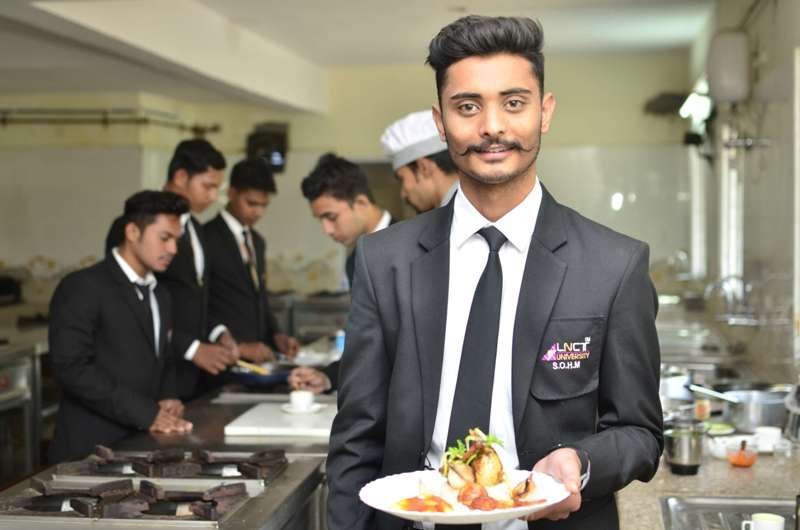
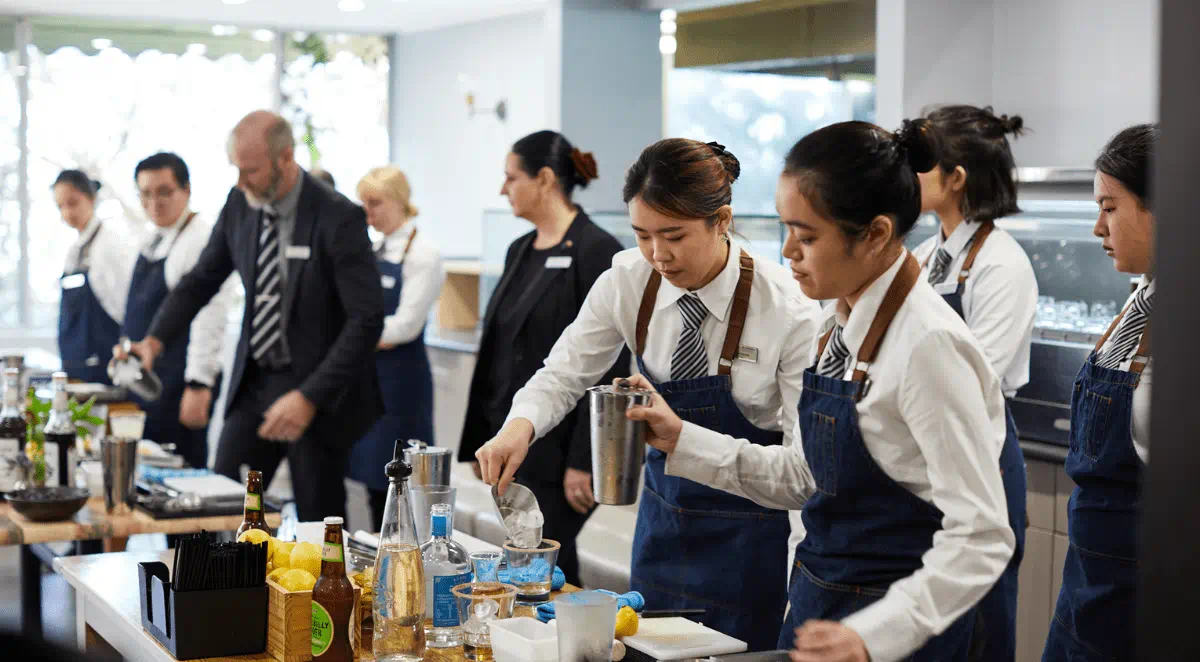
The majority of the course is dedicated to hands on practice in simulated hotel environments. Trainees engage in real-time scenarios such as managing front desk operations, handling guest relations, performing kitchen duties, setting dining areas, conducting reservations, and performing barista and valet services.
2.Conceptual Understanding
Foundational knowledge in hygiene, workplace safety, guest communication, food service standards, and professional ethics is provided through concise and targeted theory sessions.
3.Industry-Driven Curriculum
Modules are aligned with current market needs and trends in both local and international hospitality sectors, especially targeting employability in the Gulf and South Asian regions.
4.Special Modules Include:
- Workplace Ethics & Civic Responsibility: Focuses on building integrity, discipline, and service-oriented behavior aligned with global hospitality standards.
- Job Search & Entrepreneurship Skills: Provides knowledge of employment platforms, freelancing, visa processes, and small business management for those seeking self-employment.
- Motivational Lectures & Success Stories: Inspire trainees through stories of real-life achievers and industry veterans to cultivate ambition, resilience, and
- Case Studies & Role Plays: Enhance understanding through real-world problem-solving simulations.
- Final Employable Project or Internship:Trainees either work on a practical capstone project aligned with their specialization or participate in a short- term industry internship. This final segment ensures they are exposed to actual workplace demands and expectations.

Training Tools/ Methodology
The training approach for the condensed 3-month Hotel Management course is designed to be practical, engaging, and outcome-oriented. It focuses on immersive learning that bridges the gap between theoretical knowledge and real-world skills. To keep the learning environment engaging and impactful, the training includes:
- Motivational Lectures: Delivered weekly to inspire personal growth, discipline, and a professional
- Success Stories: Shared through videos or guest speakers to showcase real-life examples of career progression in the hospitality field.
- Role Plays & Simulations: Used to build confidence in managing front desk scenarios, such as guest complaints, reservations, and team communication.
- Case Studies: Introduced to help trainees understand complex service situations and develop practical problem-solving abilities.
- Group Presentations & Assignments: Encourage teamwork, public speaking, and professional
- Interactive Multimedia Resources: Including videos, tutorials, digital forms, and live demonstrations to support visual and experiential learning.
Intake to the Training
- Minimum Education: Secondary School Certificate (SSC) or equivalent.
- Interest Required: Keen interest in hospitality, especially cafe/barista work.
- Physical Fitness: Must be able to handle standing and equipment-related tasks.
- Age Range: Ideally between 18 to 35
- Communication Skills: Basic Urdu or English skills for understanding instructions.
- Career Focus: Preference for candidates aiming for employment or self-employment in hospitality.
Learning Outcomes of the Course
By the end of the 3-month Hotel Management training program, trainees will have acquired both the technical competencies and professional behavior required to thrive in the hospitality industry, whether in Pakistan or abroad. Trainees will be able to:
Deliver Quality Guest Services
Demonstrate professional conduct, customer care, and hospitality standards to ensure a welcoming and satisfying guest experience across front desk, concierge, and restaurant settings.
Apply Hygiene and Food Safety Protocols
Understand and follow sanitation guidelines, personal hygiene standards, and safe food handling practices based on HACCP principles to maintain health and safety in all service areas.
Perform Core Operational Tasks
Efficiently execute essential hotel and restaurant operations including reservations, housekeeping, food service, inventory management, table setting, and guest reception.
Demonstrate Culinary and Kitchen Skills
Apply basic cooking techniques, kitchen organization, use of equipment, and preparation of simple dishes under hygienic and professional standards.
Utilize Management and Supervisory Skills
Perform tasks related to duty management, shift supervision, staff coordination, and customer complaint handling, with a focus on maintaining productivity and service quality.
Operate Hotel Technologies and Equipment
Use common hospitality tools such as reservation systems, POS terminals, barista machines, and kitchen appliances with safety and accuracy.
Exhibit Workplace Ethics and Teamwork
Show integrity, discipline, punctuality, and team collaboration in practical settings, reflecting professional behavior suitable for multicultural environments.
Pursue Employment or Entrepreneurship
Identify job opportunities in the hospitality sector or initiate self-employment through acquired skills, supported by knowledge of the job market, freelancing, and small business setup.
Course Execution
Total Duration: 3 Months (12 Weeks)
Class Schedule: 6 days per week
Daily Class Hours: 2 hours per day
Weekly Hours: 12 hours per week
Total Contact Hours: 144 hours
Employment Opportunities Across Industry Sectors
Graduates of this Course can explore a wide range of career opportunities in the local and international hospitality and service sectors. Trained individuals are well-suited for roles in:
- Hotels & Motels
- Restaurants & Cafes
- Fast Food Chains & Food Outlets
- Catering Companies & Banquet Services
- Event Management Companies
- Airlines & Airports (Hospitality Services)
- Corporate Offices (In-house Cafeterias & Beverage Services)
- Government Hospitality Services
- Industrial Canteens & Factories
- Start-ups & Entrepreneurial Ventures (Tea kiosks, mobile cafes, snack shops)
Learning Place
This Course will be delivered in a hybrid training environment designed to simulate real world hospitality settings. The learning will take place at:
Classroom Facility
For theoretical sessions, discussions, motivational lectures, and case
Equipped with whiteboards, multimedia projectors, and seating arrangements conducive to interactive learning.
Lab /Kitchen
A dedicated, fully equipped lab/kitchen and a wide range of ingredients to facilitate practical
Partner Locations (Field Exposure)
Industry visits to professional cafes, restaurants, or catering setups for real-time exposure and learning.
Workplace & Institute Ethics Guide
A strong work ethic is a cornerstone of professional success. This course not only builds technical and practical skills but also emphasizes the values and behaviors essential for thriving in professional environments. The following principles outline the expectations for conduct during training and in the workplace.
1. Attendance & Punctuality
- Attend all scheduled classes regularly and on
- Plan absences responsibly and avoid unnecessary
- Respect training hours as a reflection of real-world
2. Integrity & Character
- Be honest and accountable in all tasks and
- Complete assignments responsibly and seek to improve
- Uphold personal and professional integrity at all
3. Teamwork & Cooperation
- Work respectfully and collaboratively with peers and
- Support fellow trainees and share knowledge
- Listen to others, compromise when needed, and contribute positively to group
4. Professional Appearance
- Maintain a clean and well-groomed
- Follow dress codes and practice good personal
- Understand that first impressions matter in
5. Positive Attitude & Learning Mindset
Be open to feedback, show enthusiasm for learning, and accept responsibility for
- Demonstrate adaptability, resilience, and a willingness to learn new
- Prioritize safety and follow institute rules and
6. Productivity & Ownership
- Stay focused and complete work with quality and
- Take initiative and go beyond the minimum when
- Show pride in your performance and strive for continuous
7. Organizational & Time Management Skills
- Use time wisely and manage tasks
- Maintain cleanliness and order in
- Balance social interaction with professional
8. Communication Skills
- Practice clear, respectful, and effective verbal and written
- Engage in active listening and express ideas
- Handle customer and peer interactions with
9. Adaptability & Respect for Rules
- Follow institute protocols and workplace
- Adapt to new tools, systems, or procedures as
- Embrace change with a growth
10. Mutual Respect & Diversity
- Respect diversity in opinions, backgrounds, and
- Value every individual’s contribution and treat others with
- Build an inclusive and respectful learning